Introduction
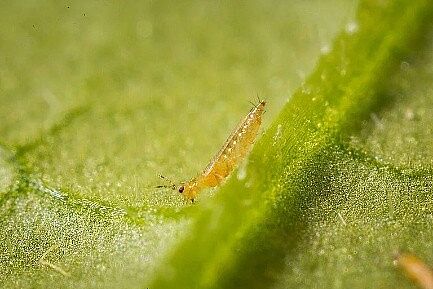
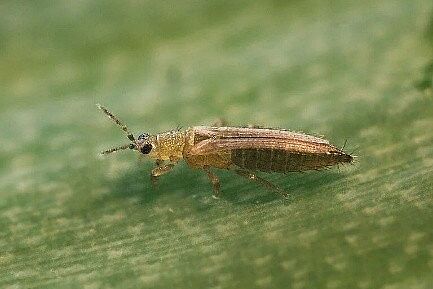
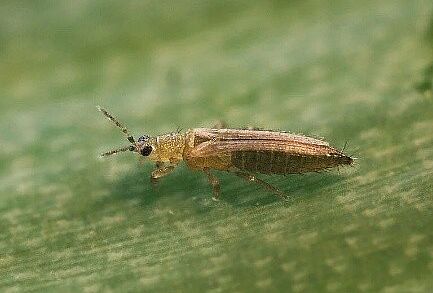
Thrips are important pests in a wide range of crops, from undercover peppers and cucumbers to outdoor citrus and table grapes. Berry production is no exception, with blueberries and strawberries particularly vulnerable under favourable conditions.
Despite their small size, thrips can damage flowers, young leaves and developing fruit, reducing fruit quality and marketability. Their ability to hide within flowers, reproduce rapidly, and fly into the cropping area makes them challenging to manage.
An integrated pest management (IPM) approach combines prevention, monitoring, biological control and targeted chemical applications to keep thrips populations below damaging levels.
Getting to Know Thrips
Which berry crops are affected?
Both blueberries and strawberries can suffer from thrips damage, although the severity depends on the species present, pest pressure and environmental conditions.
In blueberries, feeding on flowers and developing fruit can affect fruit quality, while feeding on young leaves and shoots may cause additional damage. In strawberries, thrips can damage floral tissues and developing fruit, resulting in bronzing, scarring or discolouration, as well as feeding on the growing points leading to stunting.
Because fruit appearance is particularly important in fresh-market production, detecting thrips early is essential.
Different species and feeding behaviour
Several thrips species can affect horticultural crops. Western flower thrips (Frankliniella occidentalis) is an important pest in many production systems, while other species, such as citrus thrips (Scirtothrips aurantii) and onion thrips (Thrips tabaci), may also occur.
Thrips have rasping-sucking mouthparts that damage plant cells as they feed. They commonly shelter within flowers, young leaves and other protected plant structures, making them difficult to detect.
Both larvae and adults feed on plants, although their behaviour and susceptibility to control measures may differ. Correct identification is therefore important when developing a management programme.
Understanding the life cycle
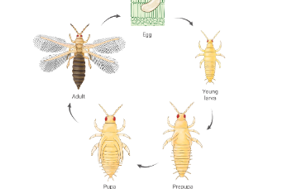
Thrips develop through egg, larval, prepupal, pupal and adult stages. The females of many thrips species insert eggs into plant tissue, while prepupae and pupae may occur in soil or growing media.
In favourable conditions, some species can complete their life cycle in under two weeks.
This rapid development allows populations to increase quickly. Furthermore, eggs and pupae are often protected from foliar sprays, meaning that treatments targeting exposed adults and larvae may not eliminate the entire population.
Managing Thrips Through IPM
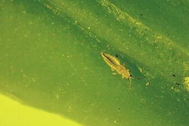
An IPM approach is particularly important in berry production because of rapid pest development, the effects of migrating thrips, extended flowering periods and the need to protect pollinators and beneficial organisms.
The availability of registered chemical options is also limited for certain berry crops in South Africa, making it challenging to effectively rotate actives, increasing the risk of resistance build-up. Combining different control methods reduces dependence on chemical applications and supports more sustainable pest management.
1. Sanitation and prevention
Start with clean planting material and inspect incoming plants for thrips or feeding damage. Remove heavily infested plant material where appropriate and maintain good crop hygiene.
Weeds and surrounding vegetation can act as alternative hosts. However, abruptly removing flowering vegetation during periods of high thrips pressure may drive insects into the crop.
Practical tip: Monitor crop margins and surrounding vegetation, particularly before flowering and when thrips numbers begin increasing. The surrounding vegetation can act as an early warning, as well as a place to establish beneficial insects against thrips.
2. Physical control
In undercover production, suitable insect-proof netting and well-maintained openings can help reduce pest entry. However, exclusion depends on the structure and mesh specifications.
In open-field production, complete exclusion is generally impractical. Monitoring sticky traps (blue or yellow), mass trapping, managing alternative host plants and regularly inspecting crop margins become particularly important.
Sticky traps are useful for tracking adult activity but should be combined with direct inspections of flowers and foliage to assess actual pest pressure.
Practical tip: Mass trapping can be used throughout the season; however, to get the best effect, introduce the traps in the period when thrips are migrating into the crop. Use mass trapping strategically during periods when thrips are flying into the crop.
3. Biological control
Biological control is most effective when appropriate beneficial organisms are introduced before thrips populations become excessive. However, if used at the correct dosages and intervals, they can also provide curative control.
Several predatory mites and insects can contribute to thrips management:
- Amblyseius swirskii: Feeds on young thrips larvae and can also help manage whiteflies. It generally performs best under warmer conditions, around 20–32°C.
- Neoseiulus cucumeris: Predates young thrips larvae and is generally better suited to cooler conditions, around 15–25°C.
- Amblydromalus limonicus: Feeds on young thrips larvae and can also target whiteflies. It is useful under relatively cool conditions, generally around 13–30°C.
- Orius laevigatus: A predatory insect that attacks several thrips life stages, including larvae and adults. Their ability to hunt and disperse easily makes them a very good tool for high thrips populations.
- Macro-mite: A soil-dwelling mite that feeds on thrips larvae and pupae in the soil, targeting a thrips stage that is normally ignored.
- Entomopathogenic fungi: Fungi such as Beauveria spp. and Metarhiziumspp. can infect susceptible thrips when environmental conditions and application methods are suitable. They can provide a knockdown effect with limited impact on beneficials.
Practical tip: Select beneficial organisms according to environmental conditions, thrips species and pest pressure. Introduce preventively or at the first signs of pest activity, following product-specific release rates and timing recommendations. Avoid combining generalist predatory mite species to prevent competition. Under high thrips pressure, use a compatible corrective treatment to reduce pest populations before introducing biological controls.
4. Chemical control
Chemical applications remain useful when monitoring indicates increasing thrips pressure, or a sudden migration of thrips from an outside area, but they should support rather than replace biological control.
Before applying a pesticide, consider:
- Target life stage: Does the product control exposed adults, larvae or both?
- Beneficial organisms: Could the application harm predatory mites or insects in the crop currently or have a residue effect on future releases?
- Flowering: Is the product suitable for use during flowering, considering pollinator safety?
- Harvest requirements: Are the pre-harvest interval and residue requirements appropriate?
- Resistance management: Are different modes of action being used appropriately?
- Contact with pest: Good application coverage is important because thrips often shelter within flowers and other protected structures. For certain chemical applications, consider mixing in a sugar additive to increase the efficacy of the spray.
Building an Effective Thrips Management Programme
Successful IPM depends on combining the different strategies throughout the season.
- Monitor regularly. Inspect flowers, young leaves and developing fruit. Tap flowers over a white or black surface to help detect thrips and use a hand lens where necessary. Record pest numbers, crop damage and beneficial activity to identify developing hotspots, whether to introduce a control, and the efficacy of the IPM program.
- Consider the surrounding environment. Wind and nearby vegetation or crops can contribute to thrips movement into the crop. Monitor field margins and plan weed management carefully to avoid disturbing vegetation when thrips pressure is high.
- Match beneficials to environmental conditions. Temperature and humidity influence predator performance. A. swirskii generally suits warmer conditions, while N. cucumeris and A. limonicus are often better suited to cooler environments. Choose according to the conditions within the crop rather than the season alone.
- Protect beneficial organisms. Before chemical applications, check compatibility information for the specific beneficial species. Broad-spectrum treatments can disrupt biological control and allow thrips populations to rebound. Monitor both pest and beneficial populations after treatment.
- Consider other pests. Spider mites, whiteflies and aphids may also require management. Select biological control agents and chemical treatments that address the wider pest complex without unnecessarily disrupting beneficial organisms.
Thrips management in blueberries and strawberries requires a preventative, integrated approach. Their small size, rapid reproduction and ability to shelter within flowers make them difficult to control once populations become established.
Clean planting material, good sanitation and regular monitoring provide the foundation for effective management. Physical measures can reduce pest entry, while appropriately selected biological control agents help suppress populations before they reach damaging levels. Chemical applications remain useful, when necessary, provided they are carefully selected to protect beneficial organisms and support long-term control.
The goal is not simply to eliminate thrips with a single treatment, but to combine compatible control measures to keep populations below damaging levels throughout the production cycle.