An integrated approach to healthier crops and sustainable production

For berry growers, managing pests effectively means balancing reliable control with the need to protect beneficial insects, minimise chemical residues and meet increasingly demanding market requirements, all in a profitable way. Integrated Pest Management (IPM) offers a practical, sustainable approach to achieving this balance. By combining regular scouting, pest monitoring, cultural, physical, and biological controls, as well as the responsible use of compatible crop protection chemicals, growers can make informed management decisions and address pest problems before they escalate.
Biological control plays an important role in an effective IPM program. Beneficial mites, parasitic wasps, and other natural enemies can help manage key pests while supporting a more balanced growing environment. Introduced at the right time and integrated into a well-planned program, these beneficial organisms can reduce reliance on conventional pesticides and help manage the risk of resistance developing in pest populations.
Put IPM into action: 5 Steps for berry growers
1. Scout early and regularly
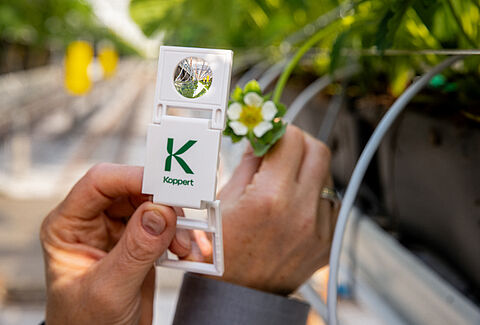
Inspect plants, growing points, flowers, and fruit for signs of pests and damage. Check the undersides of leaves, where many pests hide, and pay attention to crop edges and hotspots.
2. Monitor pest populations
Use appropriate traps and monitoring tools to detect pest activity early. Record findings to identify trends, track population changes, and guide control decisions.
3. Act before pests get out of hand
Early intervention is essential, particularly when using biological control. Identify the pest correctly and introduce suitable beneficial organisms at the right time, before populations become difficult to manage.
4. Protect your beneficial insects and mites
Check the compatibility of crop protection products with biological control agents before spraying. Avoid unnecessary pesticide applications and choose selective, compatible options wherever possible. (insert QR code for Koppert One)
5. Record, review and refine
Keep records of pest observations, beneficial organism releases, spray applications, and control results. Use this information to evaluate what works and improve your IPM programme throughout the season.
Make IPM work in your berry fields
Successful IPM starts with understanding your crop and control options, knowing your pests and acting at the right time. Whether you grow strawberries, raspberries or blueberries, well-timed interventions can make a significant difference to your pest management programme.
Take the next step towards smarter pest control. Explore the strategies in this edition of IPM in the Field and discover how integrating biological control into your existing programme can help protect your crop, preserve fruit quality and support more sustainable berry production.