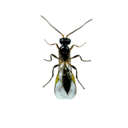
aphids to drop from the leaf and fall to the ground. Although many aphids die as a result, many will survive and migrate to other plants to begin new colonies [...] aphids produce a mummy similar to that of Aphidius spp. The aphids do not die at once but usually continue to feed and secrete honeydew. Second and third
which can be seen when the stems are cut. In banana, whole plantations may die and the soil may not be suitable for planting for many years to come. Life
as more cell sap is removed, the leaf, and eventually the whole plant, may die. In tomatoes and cucumbers, as little as 30% damage of the leaf surface can
tissue and sucking out their contents, causing the surrounding tissue to die. The resulting silver-grey patches on leaves and the black dots of their excreta
and trees. Damage is mostly caused by sap depletion; the shoots dry up and die, and defoliation occurs. In addition, the copious quantities of honeydew produced
the larvae only feed on green fruits. In case of serious infection, leaves die off completely. Mining by the caterpillar causes malformations. Damage to
tissues and sucking out their contents, causing the surrounding tissue to die. The resulting silver-grey patches on leaves and the black dots of their excreta
in fruit trees and berries that eventually result in defoliation and the dying back of twigs or larger branches. To prevent this, Rhyzobug can be applied
the crop. Heavily damaged plants appear stunted and will, in most cases, die. On rapeseed, larvae also feed on flower buds, flowers and young seed pods