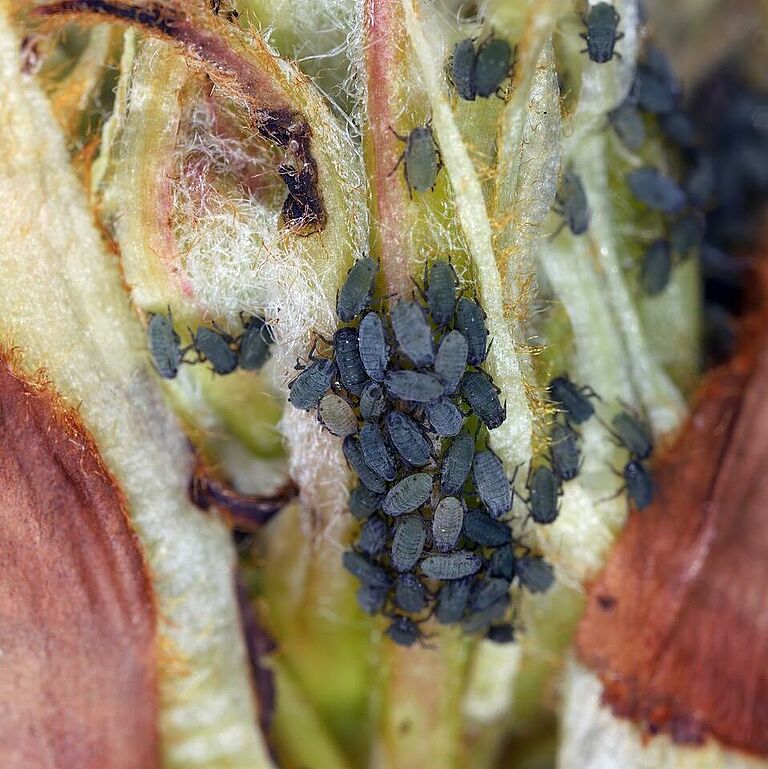
Life cycle of pear aphid
Overwintering
The aphids overwinter as small, black eggs deposited in bark crevices and near buds.
Spring development
Eggs hatch shortly before bud break. Wingless females colonize young leaves and reproduce rapidly without mating, allowing populations to increase quickly.
Population growth
Several generations develop through spring and early summer. As colonies expand, feeding causes characteristic leaf curling that protects aphids from natural enemies and challenging weather conditions.
Migration and overwintering
By mid-summer, colonies on pear naturally decline as winged adults develop. These adult aphids migrate to their secondary host plants. In autumn, they return to pear trees to reproduce sexually and lay fertilized overwintering eggs around buds and young twigs, completing the annual life cycle.