General The diamond back moth (Plutella xylostella) belongs to the family of Plutellidae . It only attacks Brassicaceae species, including cruciferous weeds. The diamond back moth (Plutella xylostella
General The Mediterranean fruit fly ( Ceratitis capitata ) is widespread in Africa, the Mediterranean basin and South America. Ceratitis capitata is a highly polyphagous species whose larvae develop i
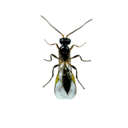
Pests Leaf miners ( Lyriomyza spp.). Mode of action Adult female parasitic wasps of Diglyphus isaea kill second and third instar leaf miner larvae in the mine and lay their eggs next to them. The eggs
General Aspidiotus nerii , the oleander scale or white scale belongs to the Coccoidea and has an almost worldwide distribution. Host plants include olive, apple, mango, palms, oleander and citrus. Dam
General The obscure mealy bug ( Pseudococcus viburni ) (formerly known as Pseudococcus affinis) originates from South America, but can now be found in many parts of the world with a temperate climate.
twice a year, in the spring and in the autumn. Wim van der Meer explains, ‘Koppert is involved in a trial in which we are investigating whether Chrysopa eggs
General The cyclamen mite ( Phytonemus pallidus ) is a harmful strawberry pest as well as a common pest found in cyclamen, gerbera and other ornamentals . Mites belonging to the family of tarsonemids
General The broad mite (Polyphagotarsonemus latus) occurs in the tropics and in greenhouses in temperate regions. The broad mite (Polyphagotarsonemus latus) has a wide range of host plants, especially
control of our beneficial nematodes. Each of the nematodes produced by Koppert has been selected to target specific pest insects. How does it work? After