‘common mango’ or ‘Indian mango’, Mangifera indica , found its way to the rest of the world and it has become one of the largest cultivated products in
which have flattened bodies and fold their wings flat over their body when at rest. The wings overlap each other exposing the scutellum, a prominent triangular
deutonymph, and adult. In the larval and nymphal stages, an active period and a resting period of roughly equal duration can be distinguished. Eggs are usually
microorganisms and is therefore not a real fungus. It survives as oospores, resting spores which are resistant to unfavourable conditions, especially dehydration
an oval shape. The first instar larvae (crawlers) are mobile, whereas the rest of the larvae stadia remain flattened on the leaf. The fourth larva stadium
are opaque white and have only three pairs of legs. They develop into the resting stage (pharate nymph). This is a transitional stage between larva and adult
white markings on their wings. The wings lie flat over their backs when at rest, displaying a characteristic black and white pattern. Adults are active predators
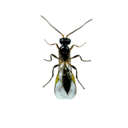
wing markings. They have a dark body coloration and are commonly seen resting on plant foliage or flying near aphid-infested areas. By recognizing these
underside of leaves. They often congregate in the axils of leaf veins to rest. Their colour can vary according to the prey eaten, and varies from almost