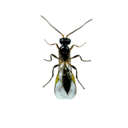
Orius laevigatus for thrips control Orius laevigatus is a small yet highly effective predatory bug used in biological pest control of thrips . This beneficial insect has been extensively integrated in
Whitefly control with the parasitic wasp Encarsia formosa Encarsia formosa is a parasitic wasp belonging to the family Aphelinidae , widely recognized for its role in biological control, particularly
Leaf miner control with the parasitic wasp Diglyphus isaea Diglyphus isaea is a small parasitic wasp belonging to the family Eulophidae within the order Hymenoptera . It is widely recognized for its r
Scale control with the parasitic wasp Aphytis melinus Aphytis melinus is a species of parasitic wasp belonging to the family Aphelinidae . This tiny wasp is widely recognized for its role in the biolo
Aphid control with the parasitic wasp Aphidius matricariae Aphidius matricariae is a parasitic wasp belonging to the family Braconidae and is widely recognized for its role in biological pest control
Aphid control with the parasitic wasp Aphidius colemani Aphidius colemani is a parasitic wasp used for biological pest control . This species belongs to the Braconidae family and is primarily known fo
Aphid control with the parasitic wasp Aphelinus abdominalis Aphelinus abdominalis is a parasitic wasp for the biological control of various aphid species. The parasitic wasp Aphelinus abdominalis is u
Mealybug control with parasitic wasp Anagyrus vladimiri Anagyrus vladimiri is a parasitic wasp belonging to the Encyrtidae family. This parasitic wasp is particularly effective for mealybug control, a
Cryptolaemus montrouzieri for mealybug control The predatory beetle Cryptolaemus montrouzieri is a species of beetle belonging to the family Coccinellidae. The beneficial insect is a small but highly