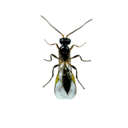
Mode of action Adult parasitic wasps emerge from the mummies and females lay their eggs into aphids . The next generation of parasitic wasps develops inside
Tomato leafminer The female moth of the tomato leaf miner ( Tuta absoluta ) lays about 260 eggs. The eggs of the tomato leaf miner ( Tuta absoluta ) are
flies , at most only several millimetres long. When the adult females feed or lay eggs, they bore a hole using their toothed ovipositor, usually in the upper
feed on plant sap and grow rapidly. When reproduction is sexual, the aphids lay eggs that overwinter. In greenhouses reproduction also takes place by par
distinctive feeding behavior that targets aphids . After the female wasp lays her eggs inside an aphid, the larvae hatch and begin to feed internally.
wasp piercing the aphid with her ovipositor, and sucking it empty without laying an egg. The small aphids are used for host feeding while the larger individuals
life cycle of plant mites: Egg: The life cycle begins with the female mite laying eggs. The eggs are usually spherical and laid on the underside of leaves [...] more distinct. The adults continue feeding on the plant sap and reproduce to lay new eggs, starting the life cycle over again. The life cycle of plant mites
parasitic wasp that targets the eggs of various stinkbug species. The adult wasps lay eggs inside the stinkbug eggs. Trissolcus larvae feed on the stinkbug larvae
emerges from its cocoon, it goes in search of a female. A fertilized female lays several hundreds of eggs in an elongated cottony egg sac composed of white
y the greenhouse whitefly ( Trialeurodes vaporariorum ). The female wasp lays her eggs inside the whitefly nymphs, which are then consumed from the inside