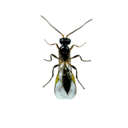
Beneficial nematodes species Several species of beneficial nematodes are commonly used in biological pest control . These nematodes play a vital role in managing insect pests and are considered benefi
Young larvae of various thrips species, eggs and larvae of whitefly . Also has an effect on all stages of non-webbing spider mites (e.g. European red mite, Panonychus ulmi ) and rust mites. Crops Do n
Orius laevigatus for thrips control Orius laevigatus is a small yet highly effective predatory bug used in biological pest control of thrips . This beneficial insect has been extensively integrated in
Leaf miner control with the parasitic wasp Diglyphus isaea Diglyphus isaea is a small parasitic wasp belonging to the family Eulophidae within the order Hymenoptera . It is widely recognized for its r
Aphid control with the parasitic wasp Aphidius matricariae Aphidius matricariae is a parasitic wasp belonging to the family Braconidae and is widely recognized for its role in biological pest control
Use Nutari as an alternative source of food for build-up and maintenance of generalist predatory mite populations ( Amblyseius swirskii , Amblyseius andersoni, Amblydromalus limonicus , Neoseiulus cal
Trianum, Koppert's biological fungicide that contains the exclusive T-22 strain of Trichoderma harzianum , has achieved excellent results in pepper crops for processing in Portugal, a country where th
Sjaak van Dijk’s father was already using the predatory mite Phytoseiulus persimilis and Sjaak himself has always used it. However, Sjaak recently made the switch to Spidex Vital . His initial experie
Transeius montdorensis is a species of predatory mite utilized in biological pest control . These predatory mites are known for their effectiveness in controlling pest populations, including thrips ,
Pests Young larvae of various thrips species, eggs and larvae of whitefly . Also has an effect on all stages of non-webbing spider mites (e.g. European red mite, Panonychus ulmi ) and rust mites. Crop