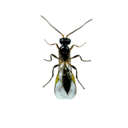
Biological control of whitefly Whiteflies are common pests in greenhouse and field crops, feeding on plant sap and transmitting harmful viruses. Their feeding weakens plants, causes leaf yellowing and
Biological control of aphids Aphids are among the most harmful pests in greenhouse and field crops, causing plant stress, virus transmission and yield loss. Effective aphid control is essential for ma
General The tobacco aphid ( Myzus persicae subsp. nicotianae ) probably evolved from the peach potato aphid in the Far East and is a key pest of tobacco crops in both the United States and South Ameri
General The cottony cushion scale, Icerya purchasi , is considered to have originated in Australia. It was accidentally introduced to California in about 1868 and devastated the citrus industry there
General The codling moth ( Cydia pomonella ) is a notorious, worldwide pest of apple and also occasionally of pear, quince, peach and other fruits. It is very common in Europe. Damage symptoms After i
General Aspidiotus nerii , the oleander scale or white scale belongs to the Coccoidea and has an almost worldwide distribution. Host plants include olive, apple, mango, palms, oleander and citrus. Dam
General The cotton bollworm ( Helicoverpa armigera ) occurs in the tropics and sub-tropics of all continents except for North America. Larvae of the cotton bollworm ( Helicoverpa armigera ) are highly
General The fall armyworm is a polyphagous pest that is indigenous throughout the Americas. Recently, it has been found in Africa too. The caterpillars of fall armyworms feed on the leaves, stems and
General The Mediterranean fruit fly ( Ceratitis capitata ) is widespread in Africa, the Mediterranean basin and South America. Ceratitis capitata is a highly polyphagous species whose larvae develop i
General The diamond back moth (Plutella xylostella) belongs to the family of Plutellidae . It only attacks Brassicaceae species, including cruciferous weeds. The diamond back moth (Plutella xylostella