General The tomato leaf miner (Tuta absoluta), a major pest of field- and greenhouse-grown tomatoes, belongs to the family of Gelechiidae . It is oligophagous, feeding mainly on Solanaceae species . T
Pests Young larvae of various thrips species and eggs and larvae of whitefly . Crops Do not use in tomato. Mode of action Predatory mites pierce their prey with their sucking mouthparts and suck out t
General The fall armyworm is a polyphagous pest that is indigenous throughout the Americas. Recently, it has been found in Africa too. The caterpillars of fall armyworms feed on the leaves, stems and
General The diamond back moth (Plutella xylostella) belongs to the family of Plutellidae . It only attacks Brassicaceae species, including cruciferous weeds. The diamond back moth (Plutella xylostella
General Pseudococcus longispinus occurs naturally in tropical and sub-tropical regions, but these days it is widespread throughout the world. The range of host plants of Pseudococcus longispinus is le
General The green peach aphid ( Myzus persicae subsp. persicae ) is an important insect pest in sweet pepper, tomato, cucumber and many other greenhouse crops. The aphid may originate from Asia, where
General The broad mite (Polyphagotarsonemus latus) occurs in the tropics and in greenhouses in temperate regions. The broad mite (Polyphagotarsonemus latus) has a wide range of host plants, especially
General The cotton bollworm ( Helicoverpa armigera ) occurs in the tropics and sub-tropics of all continents except for North America. Larvae of the cotton bollworm ( Helicoverpa armigera ) are highly
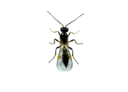
Pests House fly ( Musca domestica ), biting stable flies ( Stomoxys spp.), lesser house fly ( Fannia canicularis ) and other Fannia spp. Mode of action When the adult parasitic wasps emerge from the p
Pests Two-spotted spider mite ( Tetranychus urticae ) and other Tetranychus spp., except Tetranychus evansi . Mode of action Predatory mites pierce their prey with their sucking mouthparts and suck ou