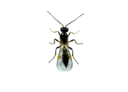
General The citrus mealybug ( Planococcus citri ) has a world-wide distribution and many and diverse host plants. In temperate regions of the world this [...] adult the females start to release a sex pheromone to attract males. Males generally fly only in the early morning.
General Aspidiotus nerii , the oleander scale or white scale belongs to the Coccoidea and has an almost worldwide distribution. Host plants include olive
miner larva and then lays a single egg (occasionally more) next to it. In general, the wasp selects late second and third instar larvae to parasitize. An [...] black in colour and unlike D. sibirica has short antennae. The female is generally rather larger than the male and can be recognized by a broad black stripe
General False codling moth ( Thaumatotibia leucotreta ) is native to sub-Saharan Africa and is found in all citrus production areas in Southern Africa
General The macadamia nut borer ( Thaumatotibia batrachopa ) is native to Africa and was originally described from the Eastern Cape province in South Africa
General Pythium is considered a ‘weak pathogen’, meaning that it can usually only affect plants that are in a sub-optimal condition or suffer from stress
Horiver Drystick does not come off on your hands Horiver Drystick traps generally do not catch insects for as long as Horiver Wetstick as the glue gets saturated
Pheromone dispensers remain effective for a maximum of 6 weeks Dosage In general two or four dispensers per hectare. Combined use Use in combination with
Dosage Adjust the quantity in relation to the number of flowers per m². As a general rule apply 100-300 pupae per m² per week. It is important to start introducing
General The codling moth ( Cydia pomonella ) is a notorious, worldwide pest of apple and also occasionally of pear, quince, peach and other fruits. It