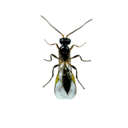
conditions for Encarsia formosa The parasitic wasp Encarsia formosa is most effective at temperatures between 20°C and 25°C (68 and 77°F). At a 24 hours average [...] Encarsia formosa Encarsia formosa is a parasitic wasp renowned for its effectiveness in controlling whitefly populations, particularly the greenhouse whitefly
the Lepidopteran egg by chewing a circular hole in the eggshell. Visual effect The black layer inside the chorion and the exit hole are evidence of parasitism
humans and that we use that difference to provide our clients with the most effective pollination solutions? See, hear, and discover. Visit our brand-new Experience
on leaves, roots, or fruits, leading to reduced growth and yield loss. Effective beetle control is essential to maintain healthy and productive crops.
action Adults and larvae feed on all stages of armoured scale insects. Visual effect Small scales are consumed entirely. In larger scales feeding damage is visible
they cannot escape and are easy to detect, count and identify. This effectively reduces the reproductive potential of the population. Presentation Ten
evenly Best working conditions Nephubug The predatory beetle is most effective at temperatures around 25°C. The lowest temperature at which development
adequate crop rotation Use clean propagation material (seed can be treated effectively with hot water) Use clean substrate in greenhouse crops Disinfect tools
integrated pest management strategies. Predatory mites are applied to effectively control pests like whitefly , thrips , and spider mites . Choosing the
cucumeris Neoseiulus cucumeris is most effective at temperatures between 15 and 25°C (59 and 77°F). It is not effective at temperatures above 30°C/86°F. Neoseiulus