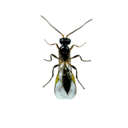
Pests Especially for potato aphid ( Macrosiphum euphorbiae ) and glasshouse potato aphid ( Aulacorthum solani ). It also has an effect on the peach potato aphid ( Myzus persicae ) and other aphid spec
Pests All stages of many mealybug species. Mode of action Larvae and adults consume the mealybug completely. Visual effect Mealybugs are consumed entirely. Pack size 1,000 larvae. Presentation 500 ml
Pests Various species of thrips . Crops Do not use in tomato. Mode of action The predatory bugs actively search for prey. With their piercing mouthparts, they extract the contents of their prey, leavi
Pests Young larvae of various thrips species and eggs and larvae of whitefly . Crops Do not use in tomato. Mode of action Predatory mites multiply in the sachet and disperse into the crop over a perio
Pests House fly ( Musca domestica ), biting stable flies ( Stomoxys spp.), lesser house fly ( Fannia canicularis ) and other Fannia spp. Mode of action When the adult parasitic wasps emerge from the p
Use the Deltatrap for monitoring and trapping male moths and mealybugs in protected and outdoor crops in combination with a species-specific pheromone. Pests Moths and mealybugs . Crops Protected and
Pests Two-spotted spider mite ( Tetranychus urticae ) and other Tetranychus spp., except Tetranychus evansi . Mode of action Predatory mites use their piercing mouthparts to extract the contents of th
Pests Especially for cotton aphid ( Aphis gossypii) ; tobacco aphid ( Myzus persicae var. nicotianae ); peach-potato aphid ( Myzus persicae var. persicae ). Mode of action Adult parasitic wasps emerge
Pests Greenhouse whitefly ( Trialeurodes vaporariorum ); Tobacco whitefly ( Bemisia tabaci ). Mode of action Adult female parasitic wasps parasitize the third and fourth larval stage of the whitefly .
Pests Larvae of various species of thrips (first and second larval stages); eggs and larvae of greenhouse whitefly ( Trialeurodes vaporariorum ) and tobacco whitefly ( Bemisia tabaci ). Crops Do not u